Strength That Holds You Up: Bone, Muscle, Joints and Balance, Trained Together
Your skeleton doesn't work alone. Bone, muscle, tendons, ligaments and the nervous system that coordinates them all adapt to the same thing: load. We train them as one system, so strength, balance and posture improve together rather than one at a time.

Strong Bones Need Strong Everything Else
Bone density gets the headlines, but staying upright, steady and independent is a team effort. Muscle pulls on bone and generates the loads it responds to. Tendons and ligaments carry that force across joints. Your balance system decides whether a stumble becomes a step or a fall.
The useful part: they all respond to the same input. Train with enough intensity and the whole chain gets the message at once.
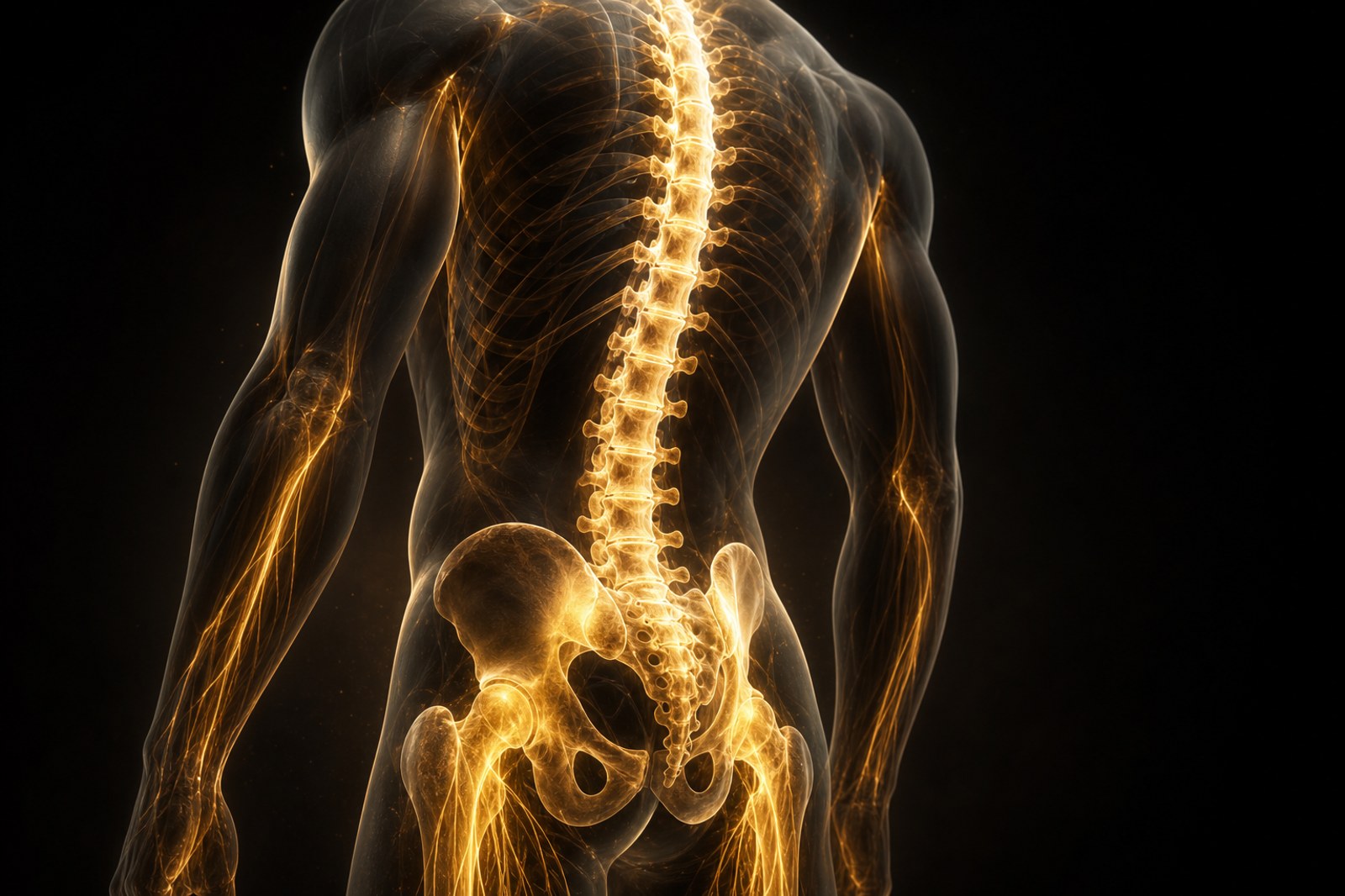
Bone
The frame. Remodels continuously and responds to high-intensity load.
Muscle
The engine. Produces the force that loads bone and protects joints.
Tendons & ligaments
The cables. Transmit force from muscle to bone and stabilise joints.
Joints
The hinges. Depend on the muscle around them for support and control.
Balance
The software. Your nervous system reading the ground and correcting fast.

Muscle Is the Quiet Half of Bone Health
From middle age on, most people slowly lose muscle mass and, faster still, muscle strength and power. When it goes far enough it has a name: sarcopenia. It shows up as harder stairs, a slower get-up from a chair, less confidence on uneven ground — and less force pulling on the bones that depend on it.
The decline isn't fixed. Muscle responds to high-intensity effort at any age, and that's where osteogenic loading earns its place: one short session asks for more force than most people produce all week.
What one trial found
In LIFTMOR-M (JBMR 2020), men with low bone mass doing machine-based isometric axial compression — the same type of loading as our devices — gained a little lean mass (+0.8%) while controls lost some (−2.4%), and got faster at a five-times sit-to-stand test, over 8 months. Small groups and a control arm that wasn't fully randomized, so treat it as encouraging, not proof.
One Stimulus, Two Supports
Loading does the structural work. The other two make it easier to stay steady, mobile and consistent. Each does a different job — none of them replaces the others.
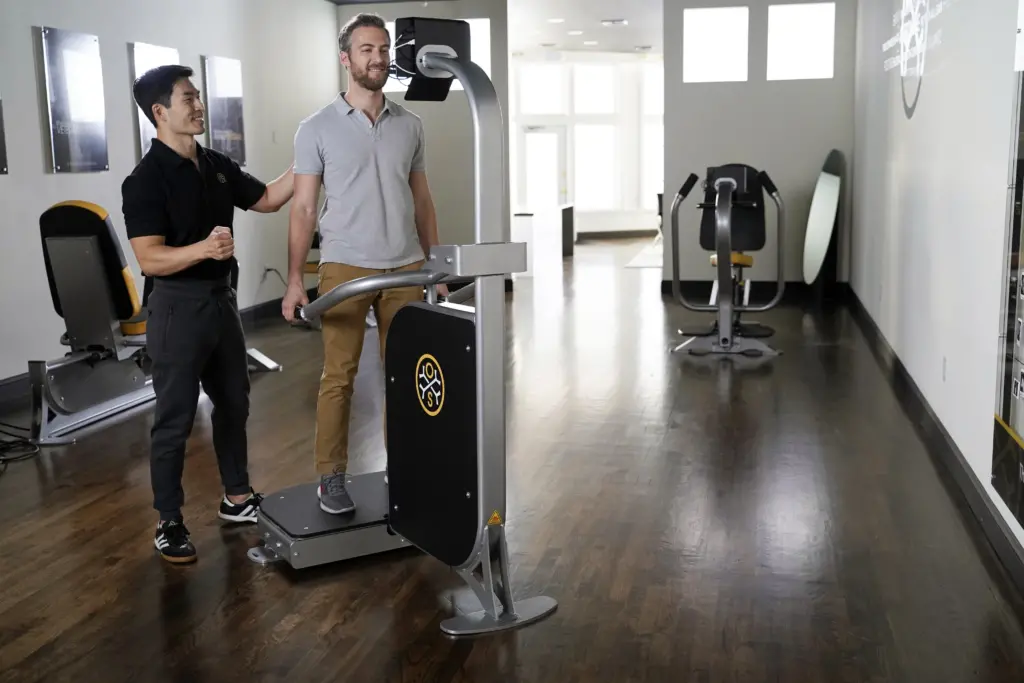
OsteoStrong osteogenic loading
Four Spectrum devices, about ten minutes once a week. You produce brief, near-maximal force in strong, supported positions — the core stimulus for bone, muscle and connective tissue.
How osteogenic loading works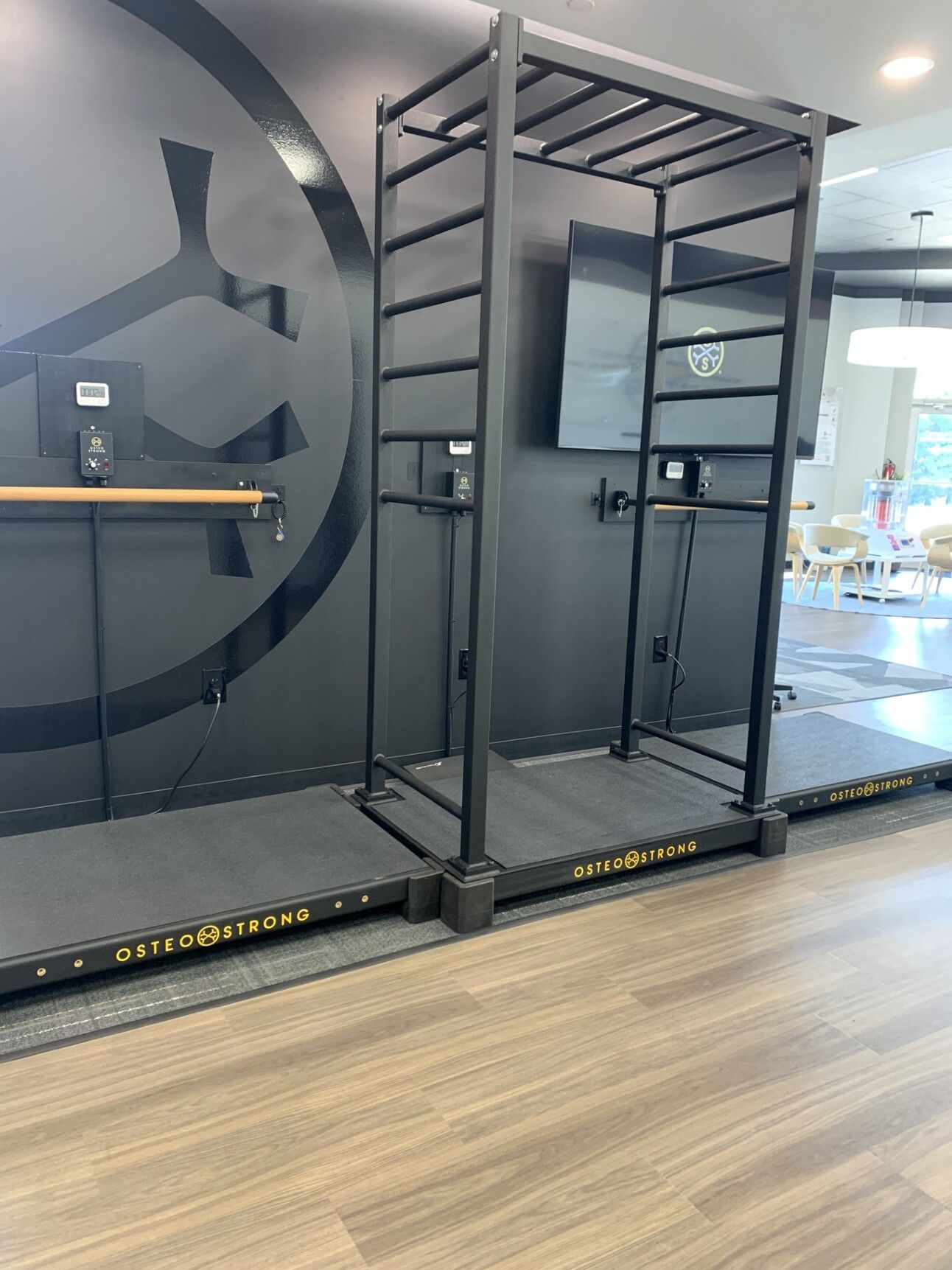
VibePlate
Whole-body vibration while you hold simple positions. It challenges the small stabilising muscles and the reflexes behind balance, and supports circulation and mobility.
VibePlate exercises
Recovery stack
HydroMassage, Normatec compression, red light and PEMF help you feel good between sessions, so you keep showing up — consistency is what makes strength stick.
Explore recoveryDealing with back pain specifically? See how we approach it →
A Simple Weekly Rhythm
Baseline
Consultation, an InBody scan and your first force readings on all four devices. Everything starts from your own numbers.
Load
One ~10-minute osteogenic loading session, with coached positioning on every device.
Support
Add VibePlate for balance work and a recovery modality if it suits you — usually 10–20 minutes more.
Re-measure
Repeat InBody and review your force trend so we can see what's changing and adjust.
Proof You Can Read Yourself
"Feeling stronger" matters, but numbers keep everyone honest. We track muscle and force against your own baseline, and REMS bone imaging is available when you want to follow bone itself.
InBody lean mass
Skeletal muscle mass and segmental lean mass for each arm, each leg and the trunk. It shows whether you're holding or building muscle — and spots left/right imbalances.
About InBodyForce output
Every Spectrum device records your peak force each session. It's the week-to-week view of how much your body can produce — a performance measure, not a bone-density reading.
About osteogenic loadingFor People Who Want to Stay Capable
No gym experience needed, and no heavy weights. If you have an acute injury, recent surgery or undiagnosed pain, check with your physician first — we'll ask before you start.
Adults 50+ losing strength
Stairs, carrying groceries, getting up from the floor — if these feel harder than they did, this is built for you.
Anyone worried about balance
A wobble on a curb or a near-fall is worth taking seriously. Strength and balance training work best together.
Low bone mass
Osteopenia or osteoporosis? Loading is self-controlled and supervised. Keep your physician involved and keep taking what they prescribe.
Posture and back support
A stronger posterior chain and trunk share the load your spine carries all day.
On a GLP-1 or losing weight
Fast weight loss can take muscle with it. A strong weekly stimulus plus enough protein helps defend lean mass.
Active adults
Golfers, hikers, pickleball players — more strength and steadier joints for the things you love doing.
Musculoskeletal Strengthening FAQ
What does musculoskeletal strengthening mean at OsteoStrong?
It means training bone, muscle, tendons, ligaments, joints and balance as one system. The core is a weekly osteogenic loading session on four Spectrum devices, supported by VibePlate for balance and recovery modalities like HydroMassage, compression, red light and PEMF.
Can this help with sarcopenia or age-related muscle loss?
Muscle responds to high-intensity effort at any age, and osteogenic loading asks for near-maximal force in a short, supervised session. We track lean mass with InBody so you can see what's happening. We don't diagnose or treat sarcopenia; if you're concerned, your physician should be part of the plan.
Will it improve my balance?
Balance depends on leg and trunk strength plus a nervous system that reacts quickly. Loading builds the strength side and VibePlate work challenges the stabilising side. Many members tell us they feel steadier, though results vary from person to person.
Is it safe with arthritis or joint pain?
You load in fixed, supported positions and control the force yourself, which many people with sore joints tolerate well. Tell us about any joint condition at your consultation, and check with your physician if pain is new, severe or undiagnosed.
Does it replace physical therapy or medication?
No. Physical therapy rehabilitates a specific injury; we build ongoing capacity, and the two work well in sequence. We never advise changing a prescription — that stays with your prescriber.
OsteoStrong is a wellness service, not medical treatment. We don't diagnose, treat or cure any condition, and no loading program has been shown to prevent fractures.
Find Out Where Your Strength Really Stands
Your first visit includes a consultation, your baseline force readings and a walkthrough of the full stack. If it isn't the right fit, we'll tell you.