Your frame is your forecast.
Strength, muscle, balance and bone are some of the clearest predictors of how long, and how well, you live. Explore the body, answer a few questions, and get a Blueprint built around you. You don't need an osteoporosis diagnosis for any of this to matter.
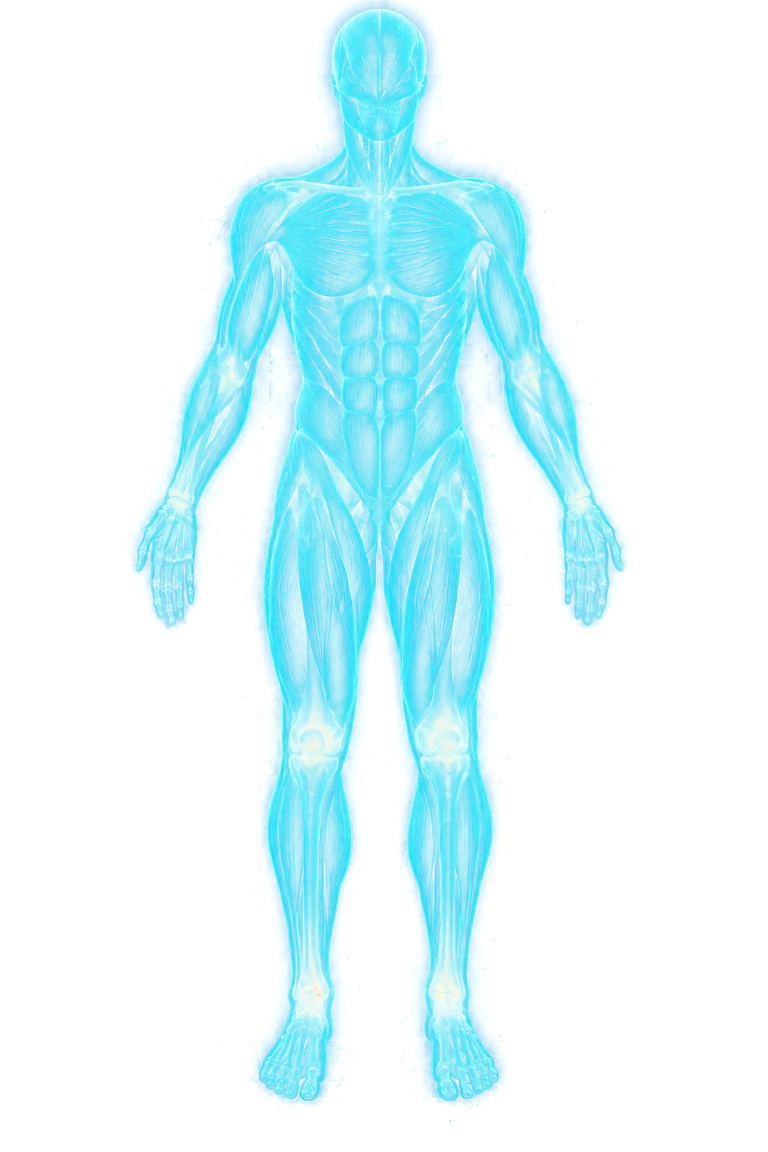
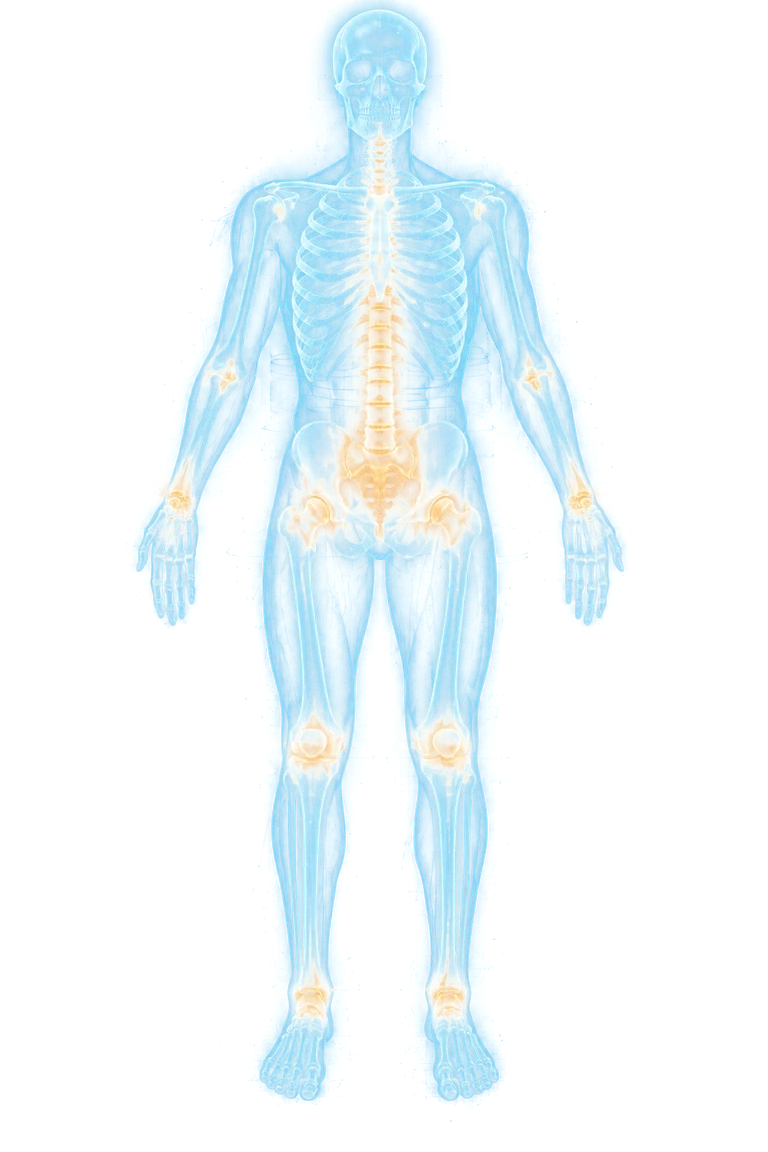
Choose your path. Learn as you go.
Like a choose-your-own-adventure book, except the story is yours. Each answer changes what you learn next and shows you how we would measure it. At the end you get a draft program, with blanks only a real assessment can fill.
Build your Longevity Blueprint.
Answer a few quick questions about you. Every answer changes what you learn next, and at the end you get a draft program written around you, with the blanks only a real assessment can fill.
The average American's gap between lifespan and healthy lifespan, the widest of 183 countries.
Higher risk of death from any cause for every 5 kg of grip strength lost.
Of spine bone density lost, on average, in the three years around a woman's final period.
Older Americans died after a fall in 2021. Falls are the leading cause of injury death after 65.
Your musculoskeletal system is a longevity system.
Most people only think about their bones after a scan comes back low. The research points somewhere much bigger: the same four things we measure and train are among the best windows researchers have into how someone is ageing. Every one of them can be measured, and every one of them responds to training.
Strength
Grip and leg strength track with survival, and strength fades years before muscle size does.
Muscle
The muscle you carry says more about your future than the number on the scale.
Balance
Balance and reaction decide whether a trip becomes a fall in the first place.
Bone
Bone is the frame everything hangs on, and it changes fastest in midlife.
Honest note: these are associations. Stronger people live longer on average, but no study proves that a particular programme, ours included, adds a set number of years.
The window nobody is measuring.
Bone and muscle change fastest in the years around menopause, while most women feel completely fine. Routine bone screening usually doesn't start until 65.
of spine bone density lost in that three-year stretch, and 5.8% at the hip.
faster fat gain as the transition begins, while lean muscle starts to decline. The scale barely moves.
the age routine bone screening begins for most women, so these years usually go unmeasured.
The good news from the same research: women aged 30 to 45 who trained built hip bone density and strength in a year. Know your starting numbers before the fastest years of change, and keep a strength signal going through them. Lesson 2, The Midlife Window, walks through it.
The 2-minute strength self-check.
Two of the simplest tests researchers use to track ageing. Do them only if you can do so safely, with a sturdy chair and a wall nearby. This is a starting point, not a diagnosis.
30-second chair stand
Sit in the middle of a sturdy chair without arms, feet flat, arms crossed over your chest. When the timer starts, stand all the way up and sit back down as many times as you can in 30 seconds. Tap the big button each time you stand.
Sit-to-rise test
Standing on a soft surface, lower yourself to sit cross-legged on the floor, then stand back up, using as little support as you can. Count each time a hand, knee, forearm or the side of your leg touches down, or you push on your knee. Skip this one if you have had a fracture or joint replacement, or aren't sure you can get back up safely.
Five lessons. Read the facts in a minute, or open the full story.
Each lesson is a set of fact cards. Tap any card and it opens into the full explanation, with the study behind it. A short quiz at the end, and if you miss a question we take you straight back to the card that answers it.
Your Frame Is Your Forecast
“I don't have osteoporosis. Why should I keep caring about my bones and muscles?”
Why muscle and bone are among the best predictors of how long, and how well, you live
The Midlife Window
“I'm in my 40s or 50s and I feel fine. Why would this matter to me now?”
Why your 40s and 50s are when the musculoskeletal story is really written
How One Fracture Changes a Life
“What actually happens when an older person breaks a bone?”
Falls, hip and spine fractures, and why independence is the real outcome
Strength Is Never Finished
“I've done the program and my numbers improved. Can I stop now?”
Why the gains you build need a signal for life, and what happens when it stops
Your Longevity Dashboard
“How will I know if I'm actually ageing well?”
The numbers worth tracking for life, and how we measure each one
Measure it. Strengthen it. Keep it.
At OsteoStrong we measure the numbers this course talks about: force on our equipment, grip, lean muscle in each limb and bone density with a radiation-free REMS scan. Then we train them in a session of about 10 minutes once a week, in supported positions where you control the effort.
We are honest about the evidence: an independent trial of our type of loading (LIFTMOR-M) found modest bone density gains, and no exercise programme, ours included, has been proven to prevent fractures. What we offer is a way to keep a strength signal going for decades, and to see your own numbers move.
Get the course. It's free.
- 5 short lessons on strength, muscle, bone and longevity
- A lesson written for perimenopause and the years before it
- Your progress saves, so you can come back any time
- No card, no obligation
Already registered? Use “Log in” on the form. We email you a code.
Free to register · Tier 1 free · Tiers 2 and 3 unlock with access
Want your real numbers?
Book an assessment at OsteoStrong Limerick and we will measure your strength, muscle and bone, and show you what your next decade could look like.
Book an assessment →